

















How to Choose a Sand-Resistant Blanket for Beach Picnics
There is a particular kind of defeat that only beach picnickers know. You've found a good spot, the weather has cooperated, the food is excellent — and then you pack up to leave and realise your blanket weighs twice what it did this morning. Sand in the cheese. Sand in the bag. Sand working its way into every corner of the car on the drive home.
This isn't inevitable. It's a material problem. Not all picnic blankets behave the same way on sand, and the difference comes down to the fibre — not the marketing. This guide explains exactly what to look for, and why one natural material has a structural advantage that most people have never heard of.
Key Takeaways
-
Sand sticks to blankets for two reasons: electrostatic charge and open fibre structure — and most synthetic materials fail on both counts
-
Fleece is one of the worst performers on sand despite being one of the most popular picnic blanket materials
-
Wool's overlapping cuticle scales naturally push debris to the surface rather than trapping it — a self-cleaning property developed over thousands of years
-
Wool is naturally antistatic, meaning it doesn't magnetically attract fine sand particles the way polyester does
-
A waterproof backing, generous size, and a proper carrying strap matter just as much as the top material
-
No blanket is completely sand-proof — but the right one will shake clean in seconds rather than defeat you in a car park
Why Does Sand Stick to Some Blankets and Not Others?
Two reasons: static electricity and fibre structure.
Synthetic fabrics — polyester, fleece, nylon — build up an electrostatic charge through friction, especially on dry sunny days. That charge acts like a low-powered magnet for fine particles. On a beach with powder-fine sand, the blanket isn't just sitting passively; it's actively drawing particles toward itself and holding them there.

Fibre structure is the second issue. Fleece, for example, has a looped open-pile surface — thousands of tiny loops that trap sand, grit and debris. Shaking helps a little, but the structure is working against you. Standard cotton can be better, but moisture makes the fibres swell and grip whatever has landed in them even more firmly.
The Four Main Beach Blanket Materials Compared
Synthetic sand-proof blankets (parachute nylon, mesh) are specifically engineered to let sand fall through rather than accumulate on top — and they do exactly that. The trade-offs: no warmth, tarpaulin underfoot, not much use once a British sea breeze appears. Perfect for sunbathing; less suited to a proper afternoon picnic.
Fleece is soft and affordable, but one of the worst performers on sand. The looped surface that makes it comfortable functions as velcro for beach debris. It also pills quickly — the softness you bought it for won't last beyond a season or two of real outdoor use.
Cotton is a meaningful step up. Tightly woven cotton sheds surface debris better than fleece and doesn't generate the same static charge as synthetics. The weakness is moisture — cotton absorbs water readily, and damp fibres grip particles more tightly. Loose-weave cotton performs little better than fleece.
Wool is where the conversation gets interesting — and where most beach blanket guides stop short.
Why Wool Is Naturally More Sand-Resistant Than You'd Expect
Every wool fibre is covered in overlapping scales — called cuticle cells — arranged like tiles on a roof. On a living sheep, this structure serves a specific purpose: as the fleece moves, the scales work to push dirt and debris outward, away from the skin. It's a self-cleaning mechanism that evolution spent a long time refining.
In a woven blanket, this property translates directly. Sand particles tend to rest on top of those scales rather than working between the fibres — there simply aren't the open loops and channels that fleece and cotton provide. A firm shake at the end of the day is usually enough.

Wool is also naturally antistatic. Its inner structure absorbs moisture from the air, which suppresses the electrostatic charge that makes synthetics so effective at recruiting fine sand. And the outermost surface of each fibre carries a thin waxy coating — the same one that makes wool naturally shower-resistant — which gives damp sand particles less to bond onto.
No blanket is completely immune to sand, and anyone claiming otherwise is being optimistic. But the difference between shaking a blanket clean and fighting one is, after a long beach day, a meaningful one.
What Else to Look for in a Beach Picnic Blanket
Sand-resistance is the starting point, but a beach blanket earns its place on a few other fronts too.
Waterproof backing. On a beach, the ground is almost never fully dry — tide lines, damp coastal sand, morning dew on the grass above the shoreline. A bonded waterproof backing is non-negotiable. Look for one that's properly bonded to the top layer rather than loosely lined — a loose lining shifts, bunches and eventually separates. The backing should also be flexible rather than rigid or crinkly underfoot; a stiff plastic-feel base makes for an uncomfortable afternoon regardless of what's on top.
Size. A cramped blanket on a beach is miserable. For two adults with food, bags and accessories around them, 140 x 180cm is a workable minimum. For a family or a group planning to stay put for the day, go bigger or bring two — there's no graceful way to perch four people on a blanket designed for two.
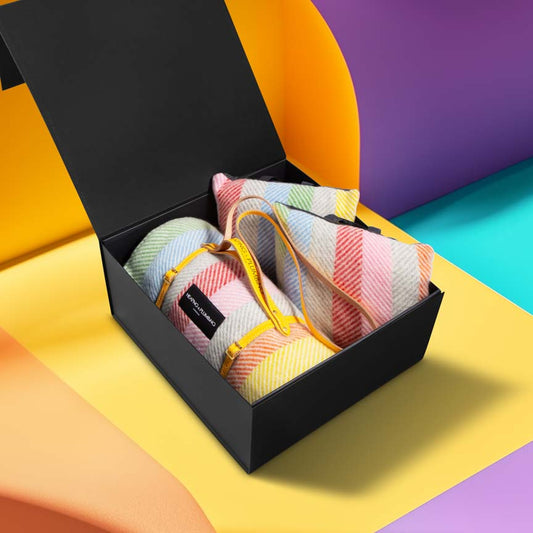
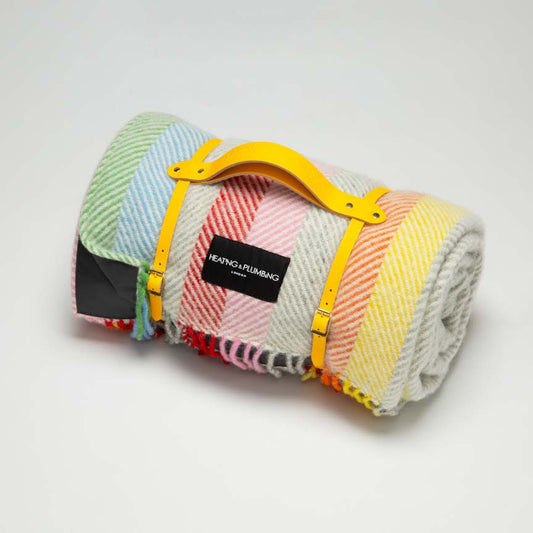
Portability. You're rarely just carrying the blanket to the beach. A leather strap that rolls, buckles and can hook onto a rucksack is a different proposition from an elastic band that pings off in a car park. It's a small detail that makes a noticeable difference when your hands are already full.
Washability. Sand will find its way in regardless of the material. A blanket you can put straight in the washing machine at the end of summer is a practical advantage worth factoring into the decision.
The Blankets We'd Recommend for the Beach
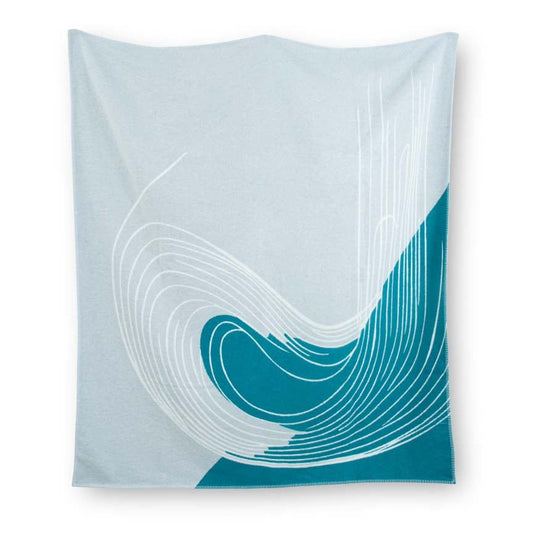
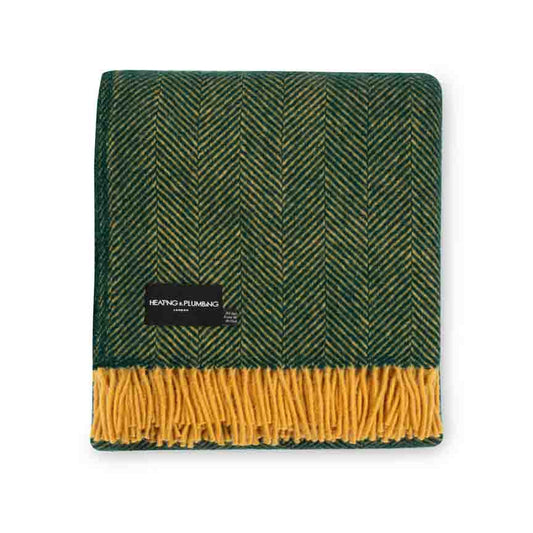
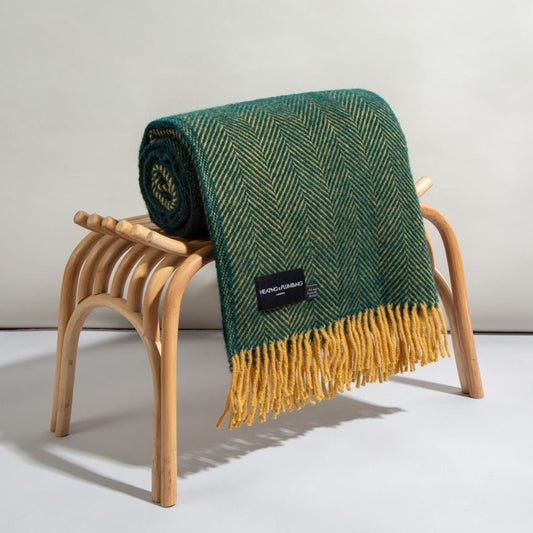
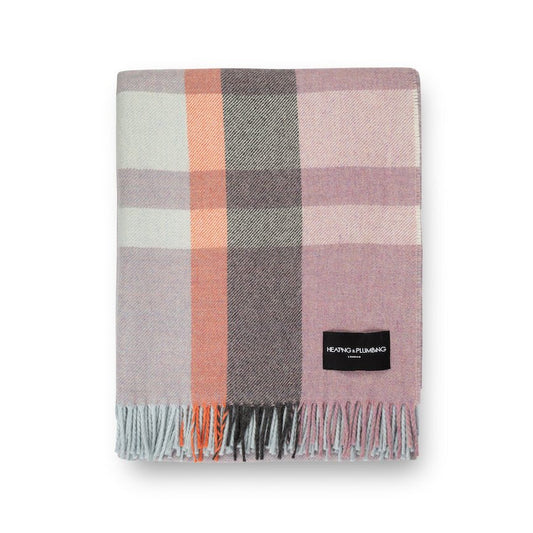
H&P's picnic blanket collection is built around pure new wool with a bonded waterproof polyester backing — machine washable, tightly woven, and finished with a handmade leather carrying strap. The wool does the work on sand and temperature; the backing handles the ground. For coastal outings specifically, the Cornish Cove (ocean blue herringbone) and the Rainbow are natural fits — both in terms of performance and the arguably important matter of looking good on a Cornish beach.

For those who want a more sustainable backing option, the Wool & Wax Edition pairs the same pure new wool top with an organic waxed cotton backing — a natural alternative to polyester that develops character with use. Worth noting that the waxed cotton backing requires slightly different care than the classic polyester-backed version, so check the label before putting it through the machine.
All blankets measure 145 x 183cm — enough space for two adults and everything that comes with them, or a small group at a push.
Beach Blanket FAQs
Is wool good for the beach?
Yes — more so than most people expect. Wool's overlapping fibre scales prevent sand from embedding the way it does in fleece or synthetic fabrics, and its natural antistatic properties mean it doesn't attract fine particles the way polyester does. It also regulates temperature well, which matters on a British beach where conditions can shift over the course of an afternoon.
What is the best material for a beach picnic blanket?
For warmth, sand-resistance and durability in one, pure new wool with a waterproof backing is one of the strongest all-round choices. If you're sunbathing somewhere very hot and dry and warmth is irrelevant, parachute nylon mesh blankets are engineered specifically to shed sand — but they offer little else beyond that.
How do you get sand out of a wool blanket?
Let it dry fully first — damp sand grips more than dry sand. Then shake it firmly outdoors. Wool's fibre structure means most sand sits at the surface rather than deep in the fabric, so a good shake tends to do the job. For a deeper clean, most pure new wool picnic blankets with polyester backing are machine washable on a gentle cool cycle.
What size picnic blanket do I need for the beach?
For two adults, 140 x 180cm is a comfortable working minimum. For a family or a group of four, consider going larger or bringing two blankets — beach days involve more kit than you think, and a cramped blanket loses its appeal quickly.
Can you use a wool picnic blanket on wet sand?
A wool blanket with a bonded waterproof backing can be used on damp or wet sand without moisture seeping through to the surface. Without a waterproof backing, moisture will work its way through over time — particularly on tidal sand that holds water beneath the surface.
The Last Word
The ideal beach blanket isn't the one that promises the most — it's the one that requires the least effort at the end of a good day. The right fibre handles sand quietly in the background, the waterproof backing handles the ground, and the leather strap handles the walk back. Everything else is just enjoying the afternoon.