

















Champagne Bucket vs Cooler Bag vs Wine Cooler: Which Do You Need?
There is a particular disappointment reserved for the warm second glass, the one that has quietly given up on being cold. Usually it means the kit was wrong for the moment: a beautiful champagne bucket stranded uselessly on a picnic rug, or a cooler bag asked to chill a bottle it was never built to chill. All three options (bucket, cooler bag, and no-ice wine cooler) work beautifully, just for different lives. One suits a laid dinner table, one a long walk to the park, one a tidy flat with a single bottle in it.
This is the straight answer to which one is yours, plus how to actually chill the bottle once you have chosen. If picnics are your thing, our companion read on how to keep food cold for a picnic pairs neatly with everything below.
First, What Are We Actually Comparing?
Here is the quiet confusion at the heart of every barware page: "champagne bucket", "ice bucket", "wine cooler" and "chiller" get thrown around as though they mean the same thing. Browse John Lewis or Harrods and they are all filed under one cheerful "buckets and coolers" heading, which helps nobody trying to buy the right thing once.

Shoppers land there wanting cold fizz and leave unsure whether they just looked at three different objects or the same object three times.
They are three genuinely different objects. Sorted plainly:
-
Champagne bucket = ice plus water, stationary, chills a bottle fast and presents it while you drink.
-
Cooler bag = an insulated tote you carry, built to move a chilled bottle and some food from your fridge to wherever you are going.
-
Wine cooler = the no-ice option, either a double-walled sleeve or an electric chiller, holding one bottle at a steady temperature with no mess.
You will notice the plain fridge is not on that list, and that is deliberate. A fridge chills a bottle happily enough, then abandons it the moment it hits a warm table, warming up again before the second pour. It is the weakest option of the lot, which is rather the whole reason the other three exist.
The difference that actually matters is where you drink, not what you spend. Here is the whole thing at a glance.
|
Chills a warm bottle? |
How long it holds cold |
Portable? |
Ice needed? |
Best for |
|
|
Champagne bucket |
Yes, fast (~2 hrs from room temp) |
~2.5 to 2.75 hrs |
No, it stays put |
Yes, ice and water |
Home tables, parties, gifting |
|
Cooler bag |
No, pre-chill first |
~1 to 3 hrs with ice packs |
Yes, that is the point |
Ice packs, not loose ice |
Picnics, beaches, anywhere you carry it |
|
Wine cooler |
Slowly (sleeve) or steadily (electric) |
Steady while in use |
Not really |
No |
Tidy indoor single-bottle sipping |
Read the table by your Saturday, not your budget. A garden lunch, a train to the coast and a quiet Tuesday in a small flat are three different questions, and they each have a different right answer. Pick by place, and the choice makes itself.
The Champagne Bucket: Fast Chill and a Bit of Theatre
The bucket earns its keep by doing the two jobs your fridge simply cannot: it chills a warm bottle quickly, then holds it cold while you sit and enjoy it. A fridge chills, then abandons the bottle the moment you set it on a warm table, where it creeps straight back towards room temperature. The bucket is the only vessel that both cools from warm and holds it there.
The trick most people miss is the water. Fill with half ice and half cold water rather than ice alone, and it will bring a room-temperature bottle down in about two hours, then hold it there for roughly 2.5 to 2.75 hours. Water conducts heat away far faster than ice on its own, which is the whole secret in one sentence.
When you are choosing a bucket, a few things matter. Capacity first: a single-bottle bucket, usually around seven inches, suits most tables, while larger floor-standing coolers of nineteen or twenty inches hold several bottles plus a reserve of ice.

Then material, which runs from acrylic and stainless steel to marble and crystal, whether it is single or double-walled, and whether it comes with a stand. A garden party or a dinner at home is exactly where a bucket shines: fast chilling for several guests, steady temperature right through the meal, and something that looks the part on the table.
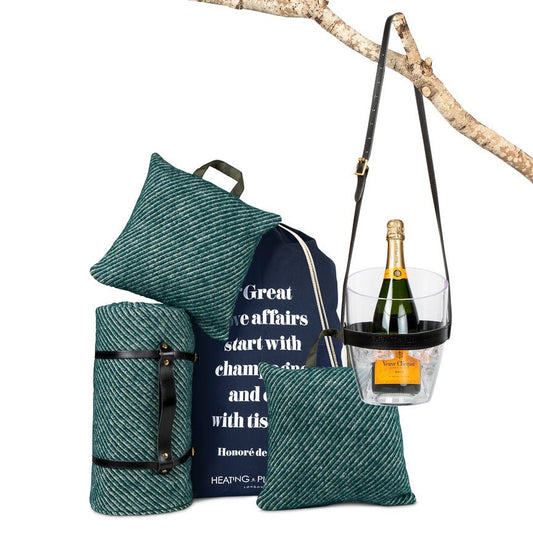
Our own Keep Your Cool champagne bucket is £95, an acrylic bucket with a British-made leather strap and a base shaped so the bottle tilts and stays buried in the ice rather than bobbing to the top. It arrives in a cotton storage bag and a gift box, and you can have it embossed with initials, a name or a date for £27.50 if it is heading somewhere special. The strap comes in yellow, white, purple, khaki, black or transparent.
Best for home tables, parties and gifts, where the bucket is half the occasion. Skip it if you need to walk anywhere with it, because a bucket of ice water and a footpath do not mix.
The Cooler Bag: The One You Can Actually Carry
A bucket is glorious on a table and hopeless on a towpath. Sloshing water, melting ice, not a free hand between you and the car. The cooler bag exists precisely because the good stuff usually happens somewhere you have to walk to.
One honest caveat the picnic guides tend to skip: a cooler bag keeps a cold bottle cold, but it will not chill a warm one from scratch. Pre-chill the bottle in the fridge the night before, tuck a frozen ice pack or two alongside it, and an insulated bag will hold the cold for roughly one to three hours depending on the sun, the shade and how long the bag stays open. That covers a picnic, a beach afternoon, a concert lawn or a bring-your-own-bottle supper with room to spare.

Capacity is worth a thought too. Bags come sized for a single bottle, for two, or for four, so match the carrier to the outing. A two-bottle bag is plenty for a romantic afternoon for two, while a four-bottle carrier earns its place at a bigger gathering where one bottle was never going to last. What else to look for: enough height to stand a champagne bottle upright, decent insulation and padding, a comfortable strap, and space for the food that always comes too.
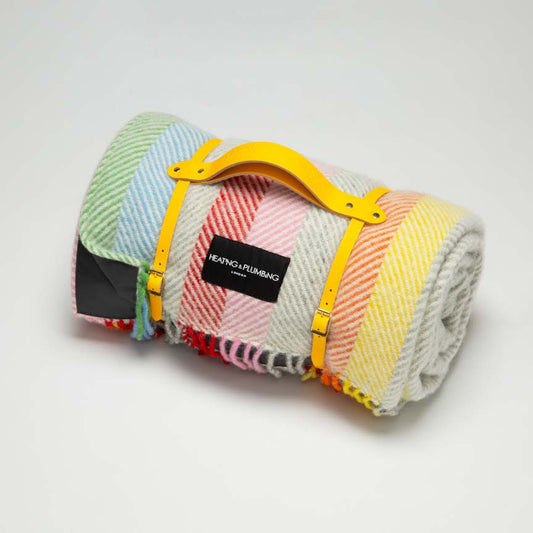
Our Park Life picnic cooler bag is made from 100% sustainably farmed cotton and vegan leather, and measures 34 x 32 x 20cm. That is tall enough to carry champagne upright with room left for lunch. It comes in grey, orange, navy and green, and it is designed in London. For the fuller packing method, our guide on how to keep food cold for a picnic goes deeper.
The verdict: this is your outdoor default, the only option you can genuinely carry with the sandwiches.
The Wine Cooler: No Ice, No Mess, One Bottle
This is the confusing one, the word retailers reach for when they are not quite sure what they are selling. Two real things hide behind "wine cooler". The first is a double-walled or vacuum sleeve you chill in the freezer, then slip over a bottle to keep it cold on the table with no ice and no drips. The second is an electric countertop chiller that holds a set temperature, quietly, for as long as it is plugged in.
Their charm is tidiness. No melting ice, no puddle on the sideboard, a steady temperature and a neat footprint, which makes them lovely for a small flat or a single everyday bottle. The trade-offs are real too. A sleeve is slow to bring a warm bottle down, most versions handle one bottle at a time, an electric chiller costs more and needs power, and none of them make quite the occasion a bucket does.
Now the honest bit, because it is on brand for us. This is the one type we do not make. We are firmly in the bucket-and-bag camp, so treat this as a fair steer rather than a nudge towards our shelf. If a no-ice sleeve suits your table better than anything we sell, buy the sleeve with our blessing.
Best for tidy indoor sipping, one bottle at a time, with nothing to mop up afterwards. Skip it if you are chilling several bottles quickly or heading out of doors.
How to Actually Chill the Bottle (The Bit Everyone Skips)
Most people load a bucket with ice, sit back, and wonder why the bottle is still stubbornly warm. The ice is not doing the heavy lifting. The water is.
The Champagne houses' own authority body, the Union des Maisons de Champagne, favours the ice bucket for one reason: it brings the wine down gradually and then keeps it there, with the water in the mix doing the fast, even cooling. Ice alone barely touches the glass. Water wraps the whole bottle and pulls the heat out. The method runs like this:
-
Fill the bucket with half ice and half cold water, to about an inch below the rim.
-
Lower the bottle in up to its neck, so the cold liquid surrounds it.
-
Give it roughly two hours from room temperature, or about 40 minutes if the bottle started in a cool cellar.
-
Leave the bottle in the bucket to serve, topping up ice as it melts.
Now the temperature question every guide leaves dangling. Chill the bottle to around 6°C, not colder, because it warms to a lovely 8 to 10°C by the time it reaches the glass. Serve it too cold and you flatten the aroma, muting the very thing you paid for.
One firm rule: never the freezer. It over-chills the wine, dulls the bubbles, and a forgotten bottle can crack or burst. Ice and water is faster and far kinder. The same approach works for prosecco, cava, rosé and white wine, with only the ideal temperature nudging a degree or two either way.
The Bottom Line: Which One Should You Buy?
Three questions, three clear answers.
If you entertain at home, or you want the giftable centrepiece that is half the fun of opening the bottle, buy the champagne bucket. It chills fast, holds long and looks the part on the table.
If your best afternoons happen at picnics, beaches or anywhere you carry your drinks, buy the Park Life cooler bag. It is the only option that travels with the food and arrives still cold.
If you want one bottle kept tidily cold indoors, with no ice and nothing to wipe up, a no-ice wine cooler is your friend, even if it is the one we leave to others.
Plenty of people end up with a bucket for home and a bag for out, and quite right too. They answer different questions, so owning both is common sense rather than indulgence. Either one makes a gift that looks like real thought went into it, which is rather the point. Chilled properly, in the right vessel for the moment, is where the quiet joy lives.
FAQ
What is a champagne bucket actually called?
A champagne bucket, an ice bucket, or in French a seau à champagne. The names are used more or less interchangeably. Larger floor-standing versions, the sort that hold a bottle plus a reserve of ice, are usually called champagne coolers or wine coolers, which is exactly where the confusion between the categories starts.
What is the difference between a champagne bucket and a wine cooler?
A champagne bucket uses ice and water to chill a bottle fast and doubles as a serving centrepiece on the table. A "wine cooler" usually means the no-ice option: a double-walled sleeve or an electric chiller that keeps a single bottle at a steady temperature with no mess. Bucket for speed and occasion, wine cooler for tidiness.
How long does a cooler bag keep champagne cold?
Roughly one to three hours with a frozen ice pack or two, depending on the ambient heat, how much shade you find, and how often you open it. A cooler bag holds cold rather than creating it, so chill the bottle in the fridge first, then let the insulated bag carry that cold to wherever you are drinking.
Can I chill champagne in the freezer?
No. The freezer over-chills the wine, flattens the bubbles and aroma, and a forgotten bottle can crack or burst under pressure. A bucket of half ice and half cold water is faster and far safer, bringing a room-temperature bottle down in about two hours with no risk to the wine or the bottle.
Does the same kit work for prosecco and rosé?
Yes. A bucket, a cooler bag and a wine cooler all chill prosecco, cava, rosé and white wine in exactly the same way as champagne. Only the ideal serving temperature shifts a little between styles, so the vessel you choose depends on where you are drinking, not what is in the bottle.