

















What Is the Correct Serving Temperature for Champagne?
Most champagne in Britain is served too cold. It arrives at the table straight from the fridge or fresh out of an ice bucket, poured immediately, and consumed at a temperature that suppresses much of what makes it worth drinking in the first place. The bubbles are fine, the glass is cold, and everything about it signals celebration — but the wine itself is largely muted.
Temperature is not a minor detail in champagne service. It is the single variable that most directly determines whether the aromas reach you, whether the mousse feels fine or coarse, and whether a complex vintage bottle actually tastes complex. Get it right and the wine does the work. Get it wrong and you are essentially paying for something you cannot fully taste.
The good news is that the correct temperatures are specific, consistent and easy to remember once you understand the logic behind them.
Key Takeaways
- Non-vintage champagne is best served at 8 to 10°C — cold enough to preserve freshness and fine bubbles, warm enough for the aromas to come through
- Vintage champagne and prestige cuvées should be served slightly warmer, at 10 to 12°C — they have more complexity to express and need a little warmth to do it
- Rosé champagne sits at around 9 to 10°C — cooler than a still rosé, warmer than a standard brut
- Below 7°C, taste receptors are effectively numbed — the wine tastes of very little regardless of quality
- Above 12°C, CO₂ escapes too quickly, bubbles become coarser and the wine loses its structure
- The glass warms the wine — champagne is typically poured a degree or two cooler than the ideal drinking temperature to account for this
Why Temperature Matters More Than Most People Realise
Champagne is a pressurised system. Every bottle contains carbon dioxide dissolved in the wine under significant pressure, and temperature governs how that CO₂ behaves from the moment the cork is removed to the last pour.
Serve too cold and two things happen. First, the taste receptors in the mouth are effectively numbed — at 6°C or below, the wine tastes of almost nothing, regardless of its quality or complexity. Second, the aromatic compounds that give champagne its character — the brioche, the citrus, the chalk minerality, the toasted notes in a well-aged vintage — need a certain amount of warmth to volatilise and reach the nose. Remove that warmth and the aromas stay in the glass rather than reaching you.

Serve too warm and the opposite problem emerges. Above 12°C, CO₂ escapes too quickly from the wine. The bubbles become larger, coarser and shorter-lived. The mousse — that fine, persistent effervescence that distinguishes great champagne — degrades noticeably. The wine can feel flat and unbalanced even before it has been in the glass for long.
The ideal temperature window sits between these two failure modes, and it shifts slightly depending on the style of wine.
The Correct Temperature by Champagne Style
Non-Vintage Champagne: 8 to 10°C
Non-vintage champagne — the standard brut expressions from most houses, made by blending multiple years to achieve a consistent house style — is designed to be fresh, vibrant and immediately expressive. It does not need warmth to reveal complexity it does not have. The priority here is preserving that freshness and ensuring the bubbles are fine and lively.
At 8 to 10°C, non-vintage brut is at its best: bright on the nose, clean on the palate, with the kind of persistent fine mousse that the winemakers worked to achieve. This is the style most people are drinking most of the time — at parties, at events, as an aperitif — and it is the temperature range the major houses recommend consistently.
Vintage Champagne: 10 to 12°C
Vintage champagne is made from grapes harvested in a single exceptional year, aged considerably longer than non-vintage, and priced accordingly. The extra time on the lees develops complexity — toasty, brioche notes, deeper fruit, a texture and weight that non-vintage bottles do not have. That complexity is exactly what you are paying for, and serving it too cold prevents you from tasting it.
At 10 to 12°C, a vintage bottle opens gradually in the glass, revealing layers of aroma and flavour that remain suppressed at lower temperatures. Think of it less like a standard drinks-party brut and more like a serious white wine — something that rewards attention and a little patience rather than something to be poured immediately from an ice bucket.
"Vintage champagnes are very delicate. When served too cold, they stun the taste buds rather than absorbing into the palate."
Rosé Champagne: 9 to 10°C
Rosé champagne occupies the middle ground. The inclusion of still red wine in the blend — or, in some houses, skin contact during fermentation — adds a layer of red fruit character that benefits from slightly more warmth than a standard brut. Too cold and the fruit notes disappear; too warm and the freshness that makes rosé so appealing in summer is lost.
At 9 to 10°C, the strawberry, raspberry and cherry notes come through cleanly without the wine losing its crispness or structure.
Prestige Cuvées: 10 to 12°C
The top of any major house's range — Dom Pérignon, Krug Grande Cuvée, Bollinger R.D., Ruinart's Dom Ruinart — should be treated as vintage wine regardless of whether a year appears on the label. These bottles have been aged for extended periods, often with significant oak influence, and they have genuine complexity to reveal. Give them the same temperature consideration as vintage champagne.
A quick reference:
| Style | Ideal serving temperature | Key priority |
|---|---|---|
| Non-vintage brut | 8 to 10°C | Freshness, fine mousse, immediate vibrancy |
| Vintage champagne | 10 to 12°C | Aromatic complexity, texture, depth |
| Rosé champagne | 9 to 10°C | Red fruit expression, balance of fruit and freshness |
| Prestige cuvée | 10 to 12°C | Full aromatic development, structural complexity |
| Extra-brut / zero dosage | 8 to 9°C | Crispness and precision — warmth amplifies acidity |
| Demi-sec / sweeter styles | 8 to 10°C | Balances sweetness against residual acidity |
The Glass Warms the Wine - Account for It
One practical point that most guides overlook: the moment champagne is poured into a glass, it begins warming up. A glass at room temperature — which is what most glasses are at a dinner table or outdoor event — will raise the temperature of the wine by two to three degrees within the first few minutes.
This means champagne should be poured at the cooler end of its ideal range, not the warmer end. A non-vintage brut poured at 8°C will reach 10 to 11°C in the glass after a few minutes — exactly where it should be. Pour it at 10°C and it will be at 12 to 13°C before the first glass is finished.

The practical implication: do not take the bottle out of the ice and leave it on the table. Return it to the bucket between pours. Keep the bucket filled with an ice-water mix rather than ice alone — liquid maintains continuous contact with the bottle and chills it evenly.
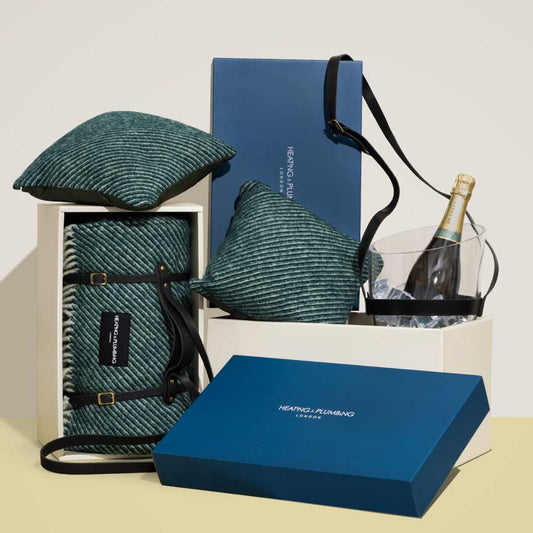
H&P's champagne buckets are designed with this in mind — built for outdoor entertaining where the bottle needs to stay at temperature across a full afternoon, not just the first pour. Serve in clean, room-temperature glasses rather than pre-chilled ones, which can slow the natural warming process that allows the wine to open up.
What Happens If You Get It Wrong
It helps to know what to look for if the temperature is off, because the signs are usually clear once you know what you are tasting for.
Too cold:
- Very little aroma — the wine smells of almost nothing when you bring the glass to your nose
- The mousse feels sharp rather than creamy
- The finish is short — the wine disappears rather than lingering
- Complex bottles taste simple and one-dimensional
Too warm:
- Large, coarse bubbles that collapse quickly in the glass
- A slightly flat or flabby texture
- Aromas that seem to blow off quickly rather than building
- The wine feels heavy and loses its sense of refreshment
If champagne arrives too cold — which is common — the best response is simply to wait. Hold the glass in both hands briefly. Give it three or four minutes in the glass before drinking seriously. The wine will come to you rather than requiring you to go to it.
FAQs: Champagne Serving Temperature
What temperature should champagne be served at?
It depends on the style. Non-vintage champagne is best served at 8 to 10°C. Vintage champagne and prestige cuvées benefit from being slightly warmer, at 10 to 12°C, to allow their complexity to fully express. Rosé champagne sits at around 9 to 10°C. Below 7°C, the wine is effectively muted regardless of quality.
Should vintage champagne be served colder or warmer than non-vintage?
Warmer. Vintage champagne has more aromatic complexity to express — toasty, brioche and tertiary notes developed through extended ageing — and these aromas need a little warmth to volatilise and reach the nose. Serving at 10 to 12°C rather than 8 to 10°C makes a noticeable difference with a quality vintage bottle.
Why does champagne taste flat when it is too warm?
Above 12°C, carbon dioxide escapes from the wine too rapidly, producing larger, coarser bubbles that collapse quickly. The mousse — the fine, persistent effervescence that defines great champagne — degrades noticeably, and the wine can feel heavy and unbalanced even in the first glass.
How do I know when champagne is at the right temperature without a thermometer?
Touch both the neck and the body of the bottle. When they feel roughly the same temperature, the wine has chilled evenly throughout — a good indicator that it is ready to pour. A bottle that is cold at the base and warm at the neck needs more time in the bucket.
Does the champagne glass affect serving temperature?
Yes. A room-temperature glass raises the temperature of champagne by two to three degrees within the first few minutes of pouring. This is actually desirable for non-vintage brut — pour at 8°C and drink at 10 to 11°C as the glass does its work. For vintage champagne, it reinforces the argument for pouring at the cooler end of the 10 to 12°C range and letting it open gradually.
The Last Word
Temperature in champagne is not about precision for its own sake. It is about giving the wine the conditions it needs to be what it is — whether that is a crisp, celebratory non-vintage brut or a complex, aged vintage that deserves to be tasted properly. The difference between 8°C and 12°C is not dramatic on a thermometer. In the glass, it is the difference between a wine that speaks and one that stays stubbornly silent.
For how to reach the right temperature quickly when time is short, see our guide to chilling champagne in 20 minutes without a freezer.